Basement water damage is one of the most stressful, expensive, and structurally dangerous problems a homeowner in Massachusetts can face. According to industry data, an estimated 98% of homes with basements will experience some form of water intrusion during their lifetime. In New England, where heavy spring rains, rapid snowmelt, and aging housing stock combine to create perfect conditions for flooding, that number is even higher.
The consequences of ignoring basement water damage even a slow leak or recurring dampness are severe. Mold can begin growing within 24 to 48 hours of water exposure. Structural wood can start to rot within days. Foundation walls under sustained hydrostatic pressure can crack, bow, and ultimately fail. What starts as a damp corner can become a six-figure restoration project if left unaddressed.
Most Common Causes of Basement Water Damage
Understanding why water enters your basement is the first step toward fixing it permanently. Many homeowners treat the symptoms of the wet floor, the damp wall without identifying the underlying cause, which means the problem returns with the next rainstorm or temperature drop. Here are the eight most common causes of basement water damage in Massachusetts homes.
| Cause | How It Happens | Urgency Level |
| Foundation Cracks | Hydrostatic pressure forces water through wall/floor cracks | HIGH call immediately |
| Poor Grading | Yard slopes toward house; water pools against foundation | MEDIUM fix within weeks |
| Clogged Gutters | Overflowing gutters dump water at the foundation | MEDIUM seasonal maintenance |
| Failed Sump Pump | Pump overwhelmed or loses power during storm | HIGH replace or backup power |
| Window Well Flooding | Debris-blocked wells fill with rainwater | MEDIUM clear regularly |
| Lateral Sewer Backup | Municipal sewer backs up into drain | HIGH health hazard, call now |
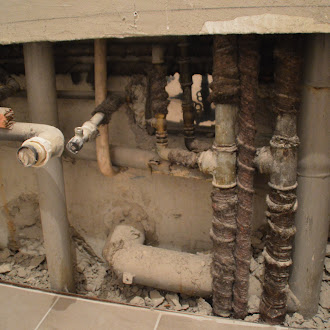
| Burst Pipe | Frozen or aged pipe bursts inside wall/floor | HIGH shut water off, call now |
| HVAC Condensation | AC unit drips without proper drainage | LOW reroute drain line |
1. Foundation Cracks
Foundation cracks are the most direct pathway for water to enter your basement. They form as a result of hydrostatic pressure the weight of water-saturated soil pressing against your foundation walls from the outside. In Massachusetts, clay-heavy glacial soil common across Plymouth County, Norfolk County, and the South Shore holds significant moisture after rainstorms, creating sustained outward pressure that eventually forces cracks open. Horizontal cracks are particularly serious and can indicate structural failure; vertical and diagonal cracks more commonly allow water seepage.
2. Poor Lot Grading
If the ground around your home’s foundation slopes toward the house rather than away from it, every rainstorm sends water directly toward your basement walls. This is one of the most common and easily overlooked causes of chronic basement water damage. The standard recommendation is that the ground should slope away from the foundation at a rate of at least six inches over the first ten feet. Homes in low-lying areas of Brockton, Abington, and Bridgewater are especially susceptible to grading problems.
3. Clogged or Damaged Gutters
Your gutter system is your first line of defense against foundation water intrusion. When gutters become clogged with leaves and debris a seasonal certainty in New England they overflow, sending large volumes of water directly onto the soil at the base of your foundation. Downspouts that deposit water too close to the house compound the problem. A properly functioning gutter system with downspout extensions that direct water at least six feet away from the foundation can prevent a significant percentage of basement water damage cases.
4. Sump Pump Failure
For many Massachusetts basements, the sump pump is the last line of defense against flooding. During a major storm or rapid snowmelt event, sump pumps run continuously for hours. Pumps that are aged, undersized, or lacking a battery backup are vulnerable to failure at precisely the worst moment when the power goes out during a storm. A failed sump pump can allow water to rise rapidly in an already-stressed basement.
5. Water Leaking Into Basement After Heavy Rain
This is one of the most frequently searched problems by Massachusetts homeowners: water leaking into the basement specifically after heavy rain. This pattern is diagnostic it points toward exterior causes such as foundation cracks, window well flooding, or overwhelmed drainage systems rather than plumbing issues. If water appears only after significant rainfall and drains away within hours, you are likely dealing with hydrostatic pressure pushing through the foundation or water overtopping window wells that lack adequate drainage.
6. Sewer Backup
Sewer backups represent the most serious and hazardous form of basement water damage. When municipal sewer lines become overloaded during heavy rainstorms, a common problem in older Massachusetts communities with combined stormwater and sewer systems, sewage can reverse flow and back up through basement floor drains. This is a Category 3 black water event requiring immediate professional remediation and poses significant health risks.
7. Burst or Leaking Pipes
Internal plumbing failures particularly burst pipes after a Massachusetts cold snap can dump hundreds of gallons of water into a basement in a matter of minutes. Supply line failures, water heater leaks, and HVAC condensate drain backups are also common internal water sources. Unlike exterior water intrusion, internal pipe failures can occur regardless of weather conditions and require immediate emergency response to prevent catastrophic damage.
Basement Water Damage Symptoms Know the Warning Signs
Basement water damage is rarely limited to what you can see on the surface. Water migrates through porous concrete, travels along joists, and hides behind finished walls for weeks or months before becoming visible. Knowing the full spectrum of water damage symptoms, especially the early ones, can mean the difference between a straightforward remediation and a catastrophic structural repair.
| Warning Sign | What It Means | Action Required |
| White/chalky powder on walls (efflorescence) | Mineral deposits left by evaporating water — chronic moisture present | Inspect foundation; waterproof |
| Musty, earthy smell in basement | Mold or mildew already growing; high humidity | Test for mold; call remediation |
| Rust stains on floor or walls | Water repeatedly reaching metal fixtures/pipes | Identify source; repair pipes |
| Peeling paint or bubbling drywall | Moisture trapped behind surfaces | Investigate wall cavity; dry out |
| Warped or buckled wood floors | Standing water soaked subfloor; structural risk | Remove flooring; assess structure |
| Cracks in foundation walls | Hydrostatic pressure or settling; entry points for water | Professional foundation inspection |
| Visible mold (black, green, white spots) | Active mold colony — health hazard | Remediation within 24–48 hours |
| Water pooling on floor after rain | Direct water intrusion through cracks or drain | Emergency extraction needed |
The Hidden Danger: Mold Growth Behind Finished Walls
In finished basements, water damage symptoms are often concealed behind drywall, drop ceilings, and carpeted floors. Mold can develop in wall cavities where it remains completely invisible while releasing spores into the living space. If you notice a persistent musty smell in your basement even without visible moisture, treat it as confirmation of hidden moisture and arrange a professional moisture inspection immediately.
Northeast Water Remediation uses thermal imaging and moisture meters to detect hidden water damage behind walls, under flooring, and inside ceiling cavities that visual inspection alone cannot identify. This technology is particularly valuable in the finished basements common across Brockton, Abington, and the surrounding South Shore communities.
Basement Water Damage Repair Cost 2026 Breakdown
One of the first questions homeowners ask after discovering basement water damage is: how much will this cost? The honest answer is that costs vary enormously based on three primary factors: the type of water involved, how quickly you respond, and the extent of structural damage. Here is a comprehensive cost breakdown based on current 2026 Massachusetts market data.
Water Category and Cost Impact
Before looking at individual repair costs, it is essential to understand that the type of water in your basement is the single biggest cost driver. The industry uses a three-category classification system:
| Water Category | Source | Health Risk | Avg Cleanup Cost |
| Category 1 — Clean Water | Burst pipe, appliance overflow, rain intrusion | Low safe to touch | $500 – $4,000 |
| Category 2 — Grey Water | Washing machine, dishwasher, toilet overflow (no feces) | Moderate avoid contact | $4,000 – $15,000 |
| Category 3 — Black Water | Sewage backup, floodwater, storm overflow | HIGH dangerous pathogens | $7,000 – $85,000+ |
2026 Basement Water Damage Repair Cost Table
These figures reflect current Massachusetts market rates. Labor costs in Massachusetts run higher than the national average due to the state’s higher cost of living and strict contractor licensing requirements.
| Repair Type | Low Estimate | High Estimate | Notes |
| Water extraction (1 inch, clean water) | $500 | $1,500 | Cost per incident |
| Water extraction (2 ft, sewage/black water) | $2,800 | $8,000+ | Biohazard surcharges apply |
| Unfinished basement full restoration | $2,000 | $15,000 | Structural drying + waterproofing |
| Finished basement full restoration | $15,000 | $85,000 | Drywall, flooring, fixtures |
| Mold remediation | $500 | $6,000 | Depends on affected area |
| Foundation crack injection (per crack) | $500 | $800 | Polyurethane or epoxy injection |
| Interior drainage system installation | $3,000 | $8,000 | French drain + sump pump |
| Exterior waterproofing (excavation) | $8,000 | $30,000+ | Major intervention; long-term fix |
| Sump pump replacement | $400 | $1,500 | With battery backup |
| Basement drain repair | $700 | $6,000 | Depends on access & complexity |
Why Response Speed Directly Affects Your Bill
The relationship between response time and repair cost is straightforward and dramatic. Water damage that is addressed within 24 hours typically involves extraction, drying, and minor remediation. The same event ignored for 72 hours adds mold remediation. Left for a week, it adds structural damage assessment, replacement of porous materials, and potential foundation inspection. In Massachusetts, the average homeowner who calls within the first 24 hours pays a fraction of what those who wait a week or longer ultimately spend.
Insurance Coverage for Basement Water Damage
Whether your homeowner’s insurance covers basement water damage depends critically on the source of the water. Understanding this distinction before you file a claim is essential:
- Sudden and accidental water damage: Generally covered under standard homeowner’s policies
- Gradual water damage: Typically NOT covered insurers view this as a maintenance failure
- Sewer backup: NOT covered under standard policies requires a separate sewer backup rider (strongly recommended in Massachusetts)
- Flooding from outside: NOT covered requires separate FEMA flood insurance
What to Do Immediately When You Discover Basement Water Damage
The actions you take in the first hour after discovering basement water damage have a greater impact on the final outcome and cost than almost anything else. Here is the correct sequence:
- Stop the source if possible. If water is coming from a burst pipe, shut off the main water supply to your home immediately. The shutoff valve is typically located where the water supply enters the house, near the water meter. If water is entering from outside during an active storm, you cannot stop the source focus on the steps below.
- Cut electrical power to the affected area. Water and electricity are a lethal combination. If water has reached or is near electrical outlets, panels, appliances, or wiring, do not enter the area until the circuit breaker serving the basement has been switched off. If you cannot safely reach your panel, call your utility company and Northeast Water Remediation simultaneously.
- Do not enter black or grey water without protection. If the water has a sewage odor, dark coloration, or appeared from a floor drain rather than a visible pipe or crack, treat it as Category 2 or Category 3 contaminated water. Do not wade through it without rubber boots, gloves, and a mask at minimum.
- Document damage before touching anything. Use your phone to photograph and video every affected surface, item, and area. Capture water level indicators on walls, damaged contents, and the apparent water entry point. This documentation is essential for your insurance claim.
- Call Northeast Water Remediation immediately. Professional water extraction equipment can remove water 20 to 30 times faster than consumer wet-vacs or mops. Industrial dehumidifiers and air movers dry structural materials at a rate that prevents mold establishment. Every hour of delay increases your final bill and your mold risk.
- Move salvageable contents to a dry area. Once you have documented and the area is electrically safe, move any undamaged or partially damaged contents, furniture, boxes, electronics to a dry area of the house or outdoors if weather permits.
Basement Water Damage Prevention: The Complete 2026 Checklist
The most cost-effective approach to basement water damage is not repairing it, it is preventing it. The investment in preventive measures is almost always a fraction of even a single remediation event. Here is a comprehensive prevention guide organized from low-cost maintenance tasks to major structural interventions.
| Prevention Method | Cost Range | Effectiveness | Frequency |
| Gutter cleaning & downspout extension | $100 – $300 | High | 2x per year |
| Yard regrading (slope away from house) | $500 – $3,000 | Very High | One-time |
| Sump pump installation | $600 – $2,000 | Very High | Replace every 7–10 yrs |
| Battery backup for sump pump | $200 – $500 | Critical during storms | Replace battery 2–3 yrs |
| Window well covers | $50 – $200 | Medium | Inspect annually |
| Foundation crack sealing (DIY) | $20 – $100 per crack | Medium (small cracks) | As needed |
| Interior drainage system | $3,000 – $8,000 | Very High | Long-term solution |
| Exterior waterproofing membrane | $8,000 – $30,000 | Highest | 25–30 year lifespan |
| Dehumidifier (basement) | $200 – $500 | Medium (moisture control) | Run continuously |
| Annual professional inspection | $200 – $500 | Preventative | Every 1–2 years |
Maintenance Tasks Every Massachusetts Homeowner Should Do Seasonally
Spring (March – May) Highest risk season in Massachusetts:
- Clean all gutters and downspouts after winter debris accumulation
- Inspect downspout extensions ensure they discharge water at least 6 feet from the foundation
- Test your sump pump by pouring water into the pit confirm the float activates the pump
- Check sump pump battery backup replace if more than 3 years old
- Walk the perimeter of your foundation after the first heavy rain note any puddling or wet spots against the house
- Inspect basement window wells for debris accumulation and drainage issues
Fall (September – November) Pre-winter preparation:
- Clean gutters after leaf fall clogged gutters during fall rains are a leading cause of foundation water intrusion
- Inspect foundation walls for new cracks before ground freezes seal hairline cracks with hydraulic cement
- Ensure your sump pump is operational before the freeze-thaw cycle begins
- Check that all basement window seals are intact before winter
- Have your waterproofing system professionally inspected if it is more than 5 years old
Long-Term Structural Solutions for Chronic Basement Water Problems
If you are experiencing repeated basement water intrusion despite regular maintenance, you likely need a structural solution. The two primary options are interior and exterior waterproofing systems:
Interior Drainage Systems (French Drains): A perimeter drainage channel is installed along the interior base of your foundation walls, directing water that enters the foundation to a central sump pit where it is pumped out. Cost ranges from $3,000 to $8,000 for most Massachusetts basements. This is the most common and cost-effective solution for chronic seepage.
Exterior Waterproofing Membrane: The most complete and permanent solution involves excavating around the foundation exterior, applying a waterproof membrane directly to the foundation wall, and installing exterior drainage. This eliminates water contact with the foundation entirely. Cost ranges from $8,000 to $30,000+ depending on foundation perimeter and soil conditions. In Massachusetts, construction supervisor licensing is required for this scope of work.
Why Choose Northeast Water Remediation for Basement Water Damage Repair
When basement water damage strikes, you need a team that responds immediately, works with your insurance company, and restores your home completely, not just extracts the standing water and leaves. Northeast Water Remediation has been serving Massachusetts homeowners since 2014 with that full-service commitment.
True 24/7/365 Emergency Response: We answer the phone at 2 AM on a holiday weekend because basement flooding does not wait for business hours. Our response teams are dispatched immediately with professional extraction and drying equipment.
Remediation and Restoration: From emergency water extraction through complete structural drying, mold remediation, and final restoration, we handle every phase of recovery under one roof. No coordinating between multiple contractors.
Full-Service Direct Insurance Billing: We work directly with your homeowner’s insurance adjuster, document the full scope of damage, and advocate on your behalf to ensure your claim is processed accurately and completely.
Licensed and Experienced Technicians: All Northeast Water Remediation technicians are trained and equipped to handle Category 1, 2, and 3 water events safely and effectively, including sewage backup remediation with full biohazard protocols.
Local Massachusetts Knowledge: We understand the specific challenges of New England basements: the clay-heavy soils, the historic foundation construction, the seasonal rain patterns, and the specific insurance requirements of Massachusetts homeowners.
Service Areas
Northeast Water Remediation proudly serves homeowners across Massachusetts, including:
• Abington, MA: Primary service area and home base
• Brockton, MA: Full water damage restoration coverage
• Bridgewater, MA: Emergency response and complete remediation
• Duxbury, MA: South Shore coastal property expertise
• East Bridgewater, MA: Rapid response team coverage
• And all surrounding Plymouth County and Norfolk County communities
Conclusion
Basement water damage is not a problem that improves with time. Every hour that water remains in contact with your foundation, your framing, your drywall, and your flooring increases the scope of damage, the cost of repair, and the risk of mold establishing itself in your home. In Massachusetts, where heavy spring rains, rapid snowmelt, and aging housing stock create ideal conditions for water intrusion, being prepared and acting quickly are your most powerful tools.
The good news is that with the right knowledge of understanding the causes, recognizing the symptoms early, and knowing what prevention investments make the most sense for your home you can avoid the worst outcomes. And when a water event does occur, knowing that a local, family-owned, fully equipped remediation team is available 24 hours a day, 7 days a week, 365 days a year is the most important protection of all.
FAQs
Q: How much does basement water damage repair cost in Massachusetts?
In Massachusetts, unfinished basement restoration typically costs $2,000 to $15,000, while finished basement restoration ranges from $15,000 to $85,000 or more. Minor clean water extraction starts around $500 to $1,500, while sewage backup cleanup begins at $2,800 and increases with severity. Massachusetts labor rates are above the national average, with waterproofing contractors charging $100 to $175 per hour. Always get a professional assessment to determine your specific repair scope before budgeting.
Q: Why is water leaking into my basement after heavy rain?
Water entering specifically after heavy rain points to exterior intrusion rather than a plumbing issue. The most common causes are foundation cracks under hydrostatic pressure, clogged gutters depositing water at the foundation, poor lot grading directing runoff toward the house, or flooded window wells. A professional moisture assessment can pinpoint the exact entry point and recommend the most cost-effective permanent fix.
Q: What are the signs of basement water damage I should look for?
Key warning signs include efflorescence (white chalky powder on walls), a persistent musty smell, visible mold in any color, rust stains on floors or walls, and peeling paint or bubbling drywall. In finished basements, the smell is often the only early warning before damage becomes extensive and costly. If you notice any of these symptoms, contact a professional remediation company immediately for a moisture inspection.
Q: Does homeowner’s insurance cover basement water damage?
Coverage depends entirely on the water source, sudden damage from a burst pipe is generally covered, while gradual seepage or slow leaks are typically excluded as maintenance failures. Sewer backup requires a separate policy rider, and groundwater flooding requires FEMA flood insurance. Northeast Water Remediation works directly with insurance adjusters to help homeowners document damage accurately and maximize their covered claims.
Q: How quickly can mold grow after basement flooding?
Mold colonies can begin establishing within 24 to 48 hours of water exposure in the warm, humid conditions of a flooded basement. After 72 hours, growth can become widespread and significantly more expensive to remediate. This is why rapid professional response within the first 24 hours is the single most important factor in controlling your total repair cost.
Q: What is the difference between water remediation and waterproofing?
Water remediation addresses damage that has already occurred including extraction, drying, sanitization, mold removal, and structural restoration. Waterproofing is a preventive measure using interior drainage systems or exterior membranes to stop future water intrusion. Northeast Water Remediation provides both services, allowing homeowners to address immediate damage and implement permanent prevention in one coordinated engagement.