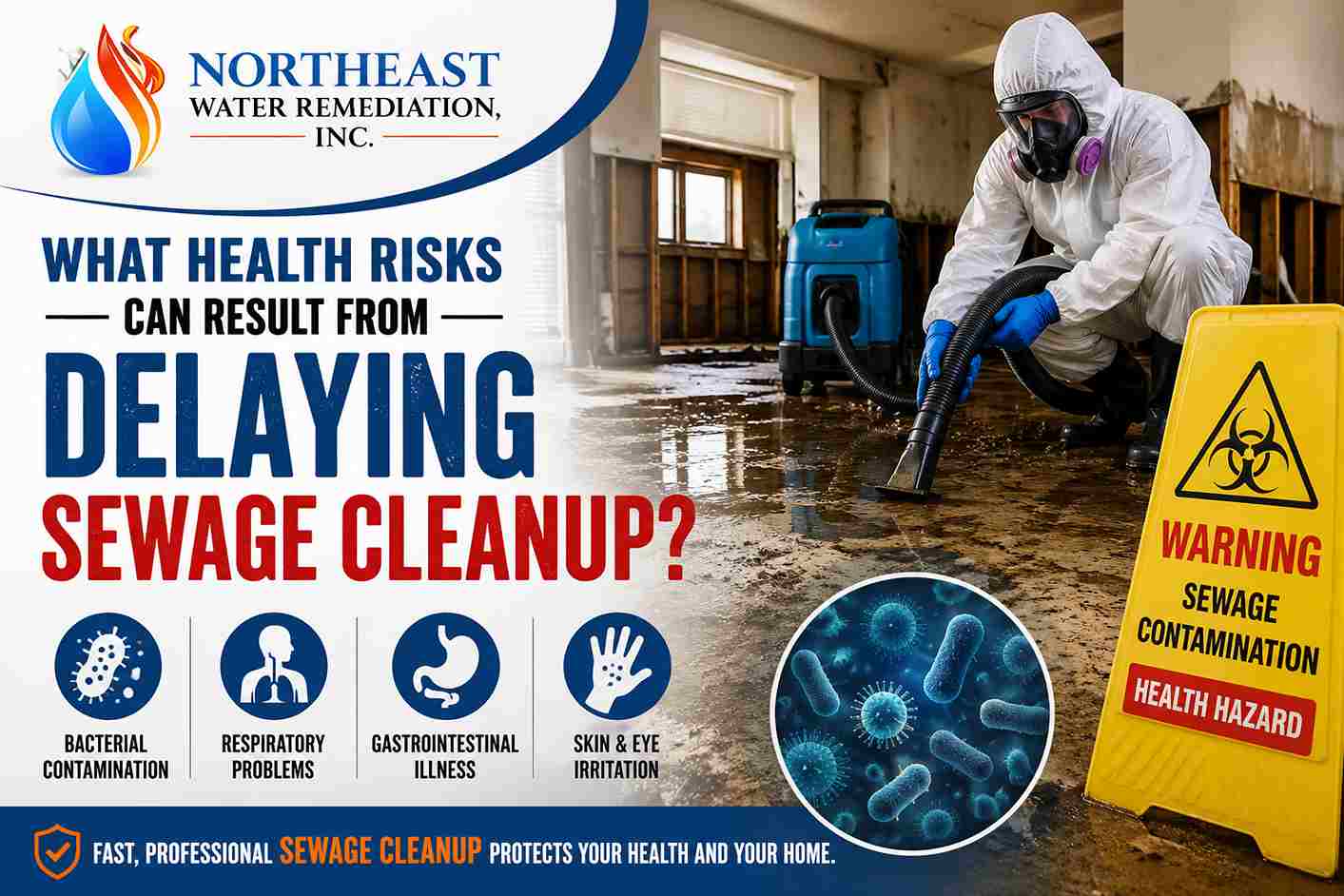
A sewage cleanup delay is never just a matter of inconvenience. Many homeowners underestimate how dangerous sewage water actually is once it enters a living space. What looks like a simple sewage backup can quickly turn into a serious health hazard, releasing bacteria, viruses, and mold spores into the air and onto surfaces.
Waiting even a few hours can allow contamination to spread through flooring, drywall, and HVAC systems. Fast wastewater cleanup protects both the structure of a home and the health of everyone living in it. For residents of Brockton, MA, understanding these risks is the first step toward acting quickly when disaster strikes.
Why Is Sewage Cleanup Considered a Health Emergency?
Sewage is classified as Category 3 water, the most contaminated water category recognized in the restoration industry. It contains raw human waste, chemicals, and pathogens that pose an immediate health risk.
This is why sewage removal should never be treated as a do-it-yourself chore. Professional biohazard cleanup teams use specialized equipment to safely extract contaminated water and disinfect affected areas.
Contamination in sewage water typically includes:
- Human waste and fecal matter
- Harmful microorganisms and parasites
- Chemical residues from household drains
- Airborne pathogens released during drying
Because exposure risk increases the longer water sits, emergency cleanup services are strongly recommended within the first few hours of a backup.
What Harmful Bacteria and Viruses Can Sewage Contain?
Untreated sewage carries a wide range of disease-causing organisms. Bacterial contamination and wastewater exposure are the two biggest concerns following any backup, since both can lead to indoor contamination that lingers long after the visible water is gone.
Common Bacteria Found in Sewage
Several bacterial strains are routinely found in sewage water, including:
- E. coli, which can cause severe stomach illness
- Salmonella, linked to fever and gastrointestinal distress
- Campylobacter, a leading cause of foodborne infections
Viruses and Other Dangerous Pathogens
Beyond bacteria, sewage water can also transmit viruses such as:
- Hepatitis A, which affects liver function
- Norovirus, known for rapid-onset stomach illness
- Rotavirus, particularly dangerous for young children
What Health Problems Can Delayed Sewage Cleanup Cause?
The longer contaminated water remains in a home, the greater the risk to everyone inside. Delayed cleanup is directly linked to several categories of illness.
Gastrointestinal Illnesses
Accidental exposure, even through indirect contact, can cause nausea, vomiting, and diarrhea. These symptoms often appear quickly and can affect an entire household.
Skin and Eye Irritation
Direct contact with sewage water frequently leads to infections, rashes, and chemical irritation of the skin and eyes, especially in children and pets who may not avoid contaminated areas.
Respiratory Problems
Once indoor contamination sets in, mold growth often follows within 24 to 48 hours. This combination can trigger asthma, allergies, and general breathing difficulties for anyone spending time in the affected space.
Increased Risk for Children, Seniors, and Pets
Children, seniors, and pets face greater health risks from sewage exposure because their immune systems are typically less equipped to fight off bacterial and viral contamination. Even brief contact can lead to more severe symptoms in these vulnerable groups.
How Does a Sewage Backup Affect Indoor Air Quality?
Beyond visible water damage, a sewage backup raises serious sanitation concerns for indoor air. Airborne bacteria can travel through a home’s ventilation system, spreading contamination far beyond the source.
Left unaddressed, this typically results in:
- Airborne bacteria circulating through HVAC systems
- Elevated moisture levels that fuel mold spores
- Persistent unpleasant odors throughout the home
- Hidden contamination behind walls and under flooring
Thorough wastewater cleanup addresses both visible damage and these hidden air quality risks.
What Happens If Sewage Damage Is Left Untreated?
Untreated sewage damage compounds over time, affecting both health and the structural integrity of a property.
- Structural damage to subfloors and framing
- Flooring damage requiring full replacement
- Drywall contamination that spreads mold
- Insulation replacement due to saturation
- Expensive repairs that grow costlier by the day
- Mold remediation is becoming necessary in more areas
Why Professional Biohazard Cleanup Is Safer Than DIY Cleanup
Attempting DIY cleanup after a sewage backup puts homeowners at unnecessary risk. Certified biohazard cleanup technicians follow strict safety protocols that go far beyond household cleaning supplies.
A professional approach to sewage removal typically includes:
- Proper PPE to prevent direct exposure
- Commercial-grade disinfectants for full sanitization
- Moisture testing to catch hidden dampness
- Complete odor removal treatment
- Safe, compliant disposal of contaminated materials
- A structured restoration process from start to finish
This is exactly why fast emergency cleanup services matter: they remove the guesswork and the health risk at the same time.
How Can Brockton Homeowners Prevent Future Sewage Backups?
Prevention is often more affordable than recovery. Homeowners in Brockton, MA can reduce the likelihood of future backups with a few proactive steps:
- Schedule regular sewer inspections
- Practice proper drain maintenance year-round
- Avoid pouring grease down household drains
- Request tree root inspections near sewer lines
- Install a backwater valve for added protection
- Create an emergency response plan in advance
Why Fast Sewage Cleanup Saves Money and Protects Your Family
Acting quickly after a sewage backup consistently pays off. A fast response typically results in:
- Lower overall repair costs
- A healthier living environment
- Faster restoration timelines
- Reduced risk of long-term mold growth
- Smoother insurance claims and better coverage outcomes
Conclusion
A sewage backup should never be ignored, even briefly. Immediate sewage cleanup protects both the structure of a home and the health of everyone inside it.
Professional restoration prevents long-term contamination, reduces repair costs, and gives homeowners peace of mind during a stressful situation.
Need Emergency Sewage Cleanup in Brockton, MA?
If you’re dealing with a sewage backup or contaminated wastewater, don’t wait for the problem to become a serious health hazard. Northeast Water Remediation provides fast, professional sewage cleanup, biohazard cleanup, and complete wastewater cleanup services for homes and businesses throughout Brockton, MA. Contact the team today for 24/7 emergency assistance and restore your property safely and quickly.
Frequently Asked Questions
How dangerous is a sewage backup?
A sewage backup is considered a health emergency because it exposes occupants to bacteria, viruses, and contaminants classified as Category 3 water, the most hazardous water type in restoration.
Can sewage exposure make you sick?
Yes. Contact with sewage water can lead to gastrointestinal illness, skin and eye irritation, and respiratory issues caused by bacteria, viruses, and mold growth.
How quickly should sewage cleanup begin?
Sewage cleanup should begin as soon as possible, ideally within a few hours, since contamination and mold risk increase significantly the longer water sits untreated.
Is it safe to stay in a house with sewage contamination?
It is not recommended. Airborne bacteria and mold spores can spread through indoor air, making the home unsafe until professional cleanup and sanitization are complete.
Does homeowners insurance cover sewage cleanup?
Coverage varies by policy. Many homeowners’ insurance plans cover sudden sewage backups, though a specific sewer backup endorsement may be required for full protection.
Why should professionals perform biohazard cleanup instead of DIY?
Professionals use proper PPE, commercial disinfectants, and compliant disposal methods that DIY cleanup cannot match, reducing health risks and preventing incomplete sanitization.