Most water damage looks contained on the surface. A wet floor, a stained ceiling, a damp wall. What restoration professionals know that property owners often do not is that visible water represents only a fraction of the total moisture problem. The rest is hidden inside wall cavities, beneath subfloor assemblies, inside insulation, and behind finished surfaces where it continues causing structural damage and fueling mold growth long after the visible water is gone.
In Brockton, MA a city with a significant stock of older triple deckers, multi family residential buildings, and pre-1970 construction moisture detection after water damage is not optional. It is the step that determines whether a property is actually restored or simply dried on the surface while hidden damage compounds. This guide explains what professional moisture detection involves, why it matters, and what happens when it is skipped.
What Is Moisture Detection and Why Does It Matter?
Moisture detection is the process of locating all water and residual moisture inside a structure following a water damage event, including moisture that has traveled beyond the visible source and is not apparent during a standard visual inspection. Water follows the path of least resistance and moves through building materials by capillary action, spreading through wall cavities, penetrating floor assemblies, and saturating insulation in areas that may show no outward signs of damage for days or weeks.
The U.S. Environmental Protection Agency notes that mold can begin establishing within 24 to 48 hours of water exposure when conditions are right. In Brockton’s older housing stock where wall cavities often contain original insulation and framing exposed to decades of seasonal moisture cycles, the conditions for rapid mold colonization are frequently already present before a water damage event occurs. Finding and eliminating every pocket of moisture before restoration begins is the only reliable way to prevent a secondary mold remediation project after repairs are complete.
The Professional Tools Used for Moisture Detection
Certified restoration professionals use a combination of specialized equipment to build a complete moisture map of an affected property. Each tool serves a specific purpose and covers limitations that other tools alone cannot address.
Moisture Meters
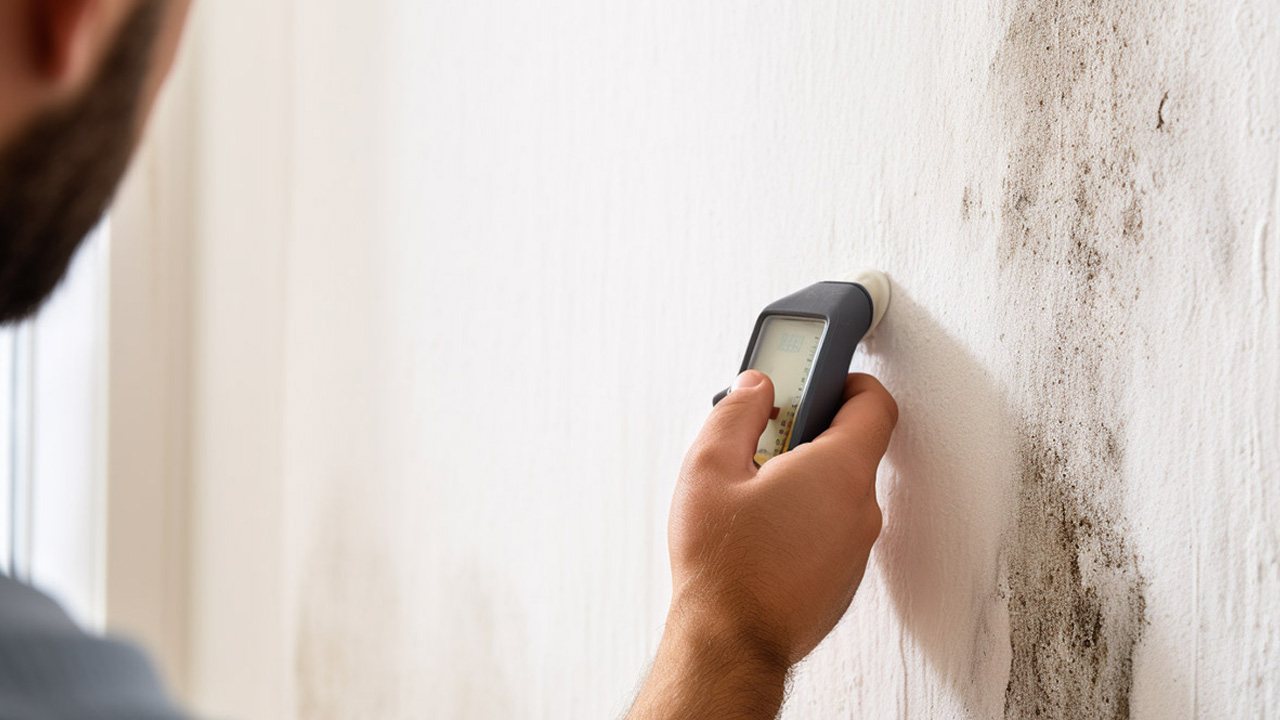
Moisture meters are the primary tool for quantifying moisture content inside building materials. Pin type meters use metal probes inserted directly into drywall, wood framing, or subfloor materials to measure moisture percentage at the point of contact. Pinless meters use electromagnetic frequency to scan beneath finished surfaces including tile, vinyl, and hardwood without leaving puncture marks, allowing technicians to screen large areas quickly before determining where pin testing is needed.
Normal moisture content in indoor building materials falls between 6% and 9%. Readings above 15% indicate elevated mold and wood rot risk that requires active drying. Readings above 20% typically mean the material is saturated beyond what drying equipment can address and requires physical removal and replacement before restoration can proceed.
Thermal Imaging Cameras
Infrared thermal imaging detects temperature differentials on building surfaces caused by evaporating moisture. Wet areas cool faster than dry areas as moisture evaporates, creating temperature anomalies that appear on a thermal camera as distinct patterns invisible to the naked eye. This allows restoration technicians to identify hidden water damage inside walls, above ceilings, and beneath flooring without invasive tear-out, mapping the full extent of moisture migration before any demolition decisions are made.
In Brockton’s older triple deckers and multi family buildings where water from a second floor leak can travel through multiple wall and floor assemblies before becoming visible, thermal imaging is particularly valuable for establishing the true scope of moisture migration.
Hygrometers and Psychrometric Calculations
Hygrometers measure relative humidity and ambient temperature inside the affected space. These readings are used to calculate the dew point and determine whether current atmospheric conditions inside the structure are supporting moisture evaporation from building materials or working against it. Proper structural drying requires creating and maintaining specific temperature and humidity conditions that accelerate moisture evaporation from within building assemblies. Without psychrometric monitoring, drying progress cannot be accurately verified.
Borescopes and Pipe Cameras
Where moisture meter readings indicate saturation inside a wall cavity but the source or extent of moisture is unclear, a borescope allows technicians to visually inspect the interior of the cavity through a small access hole without opening the entire wall. Pipe cameras serve a similar purpose for inspecting drain lines and plumbing runs for leaks or blockages contributing to ongoing moisture introduction.
Remote Moisture Sensors
During active drying, wireless moisture sensors placed throughout the affected area transmit real time readings to monitoring systems that track drying progress continuously. This allows the restoration team to adjust equipment placement and airflow direction based on actual moisture data rather than visual observation, resulting in faster and more complete structural drying across the entire affected area.
How Moisture Detection Protects Brockton Properties Specifically
Brockton’s property landscape creates specific moisture detection challenges that generic restoration approaches do not account for. The city’s stock of older triple deckers and multi family buildings contains construction methods common to pre-1970 New England residential building balloon frame construction, original lath and plaster walls, and floor assemblies where water can travel significant distances between floors before becoming visible. A pipe leak on the third floor of a Montello triple decker can saturate second and first floor wall cavities over days before a ceiling stain appears.
Brockton also experiences significant seasonal water damage risk from winter freeze thaw cycles, spring snowmelt basement flooding, and summer storm events that overwhelm aging municipal drainage infrastructure in established neighborhoods like Campello, Ashfield, and East Brockton. Each of these event types introduces moisture into building assemblies in different ways and requires a moisture detection approach calibrated to where water entered and how it likely traveled through the specific construction type.
According to the National Oceanic and Atmospheric Administration (NOAA), major storm event frequency in southeastern Massachusetts is projected to increase significantly through mid-century, increasing the frequency of water damage events across Brockton’s residential and commercial property stock. Properties that have experienced water damage without thorough moisture detection and structural drying carry elevated risk for hidden mold contamination and structural deterioration that compounds with each subsequent event.
Dealing with water damage in Brockton, MA right now? Call Northeast Water Remediation at 508-713-2652 or 603-821-4357 for immediate 24/7 emergency response and professional moisture detection.
What Happens When Moisture Detection Is Skipped
The consequences of incomplete moisture detection consistently fall into predictable patterns that restoration professionals see regularly in properties where initial cleanup was performed without professional equipment.
Hidden Mold Growth
Residual moisture inside wall cavities and floor assemblies creates the exact conditions mold requires: organic material, moisture, and moderate temperature. Mold colonies establish inside walls where they are not visible, producing mycotoxins and releasing spores into the living space through gaps in wall surfaces, electrical outlets, and HVAC systems. By the time mold becomes visible on a surface, the colony behind it is typically well established and the scope of remediation is significantly larger than it would have been with proper initial drying.
Structural Deterioration
Sustained moisture contact causes wood rot in framing, floor joists, sill plates, and structural members. In Brockton’s older residential properties where original framing is already decades old, even moderate moisture exposure over a period of weeks can compromise structural integrity in ways that require extensive and costly repairs. Metal fasteners and connectors also corrode under sustained moisture exposure, weakening connections between structural elements.
Indoor Air Quality Degradation
Hidden moisture and the mold it supports degrade indoor air quality through the release of mold spores, mycotoxins, and volatile organic compounds (VOCs) into the living or working environment. Elevated particulate matter and biological contaminants in indoor air are directly linked to respiratory symptoms, allergy aggravation, and in cases of prolonged exposure to certain mold strains, more serious health effects. Dehumidification and complete structural drying eliminate the moisture conditions that allow these contaminants to accumulate.
Increased Repair Costs
Skipping professional moisture detection almost always results in higher total restoration costs. The cost difference between drying a wet wall cavity during the initial restoration and remediating established mold inside that same cavity months later is substantial. FEMA estimates that just one inch of standing water can result in over $25,000 in structural damage when secondary effects including mold and wood rot are included in the final repair scope. Thorough moisture detection and water mitigation at the outset consistently reduces total restoration cost.
How Northeast Water Remediation Approaches Moisture Detection in Brockton
Northeast Water Remediation’s IICRC certified technicians conduct a full water damage inspection using moisture meters, thermal imaging cameras, and hygrometers on every job regardless of the apparent scope of damage. Moisture readings are taken across all affected areas including rooms adjacent to the visible damage zone, since water migration rarely respects the boundaries a visual inspection might suggest.
A complete moisture map of the property is established before any drying equipment is placed, and daily moisture readings are documented throughout the structural drying process to verify progress against IICRC S500 drying standards. Drying is not considered complete based on how materials feel or look it is verified by moisture meter readings confirming that all affected materials have returned to normal moisture content ranges before any restoration work begins.
This documentation also serves a critical insurance function. Detailed moisture logs, thermal images, and daily drying records provide the concrete evidence of proper water mitigation that supports insurance claims and prevents disputes over whether the property was properly dried before repairs were made.
Professional Water Damage Inspection and Moisture Detection in Brockton, MA
If your Brockton, MA property has experienced water damage from any source, do not assume the visible cleanup is complete. Northeast Water Remediation provides professional moisture detection, certified structural drying, and complete water damage restoration for residential and commercial properties throughout Brockton and the surrounding Plymouth County area.
Call 508-713-2652 or 603-821-4357 to speak with a team member right now.
Frequently Asked Questions
Why is moisture detection so important after water damage?
Water travels beyond visible damage into wall cavities, subfloors, and insulation. Without professional moisture detection, hidden moisture causes mold growth, wood rot, and structural deterioration that compounds over time and results in significantly higher repair costs.
How do professionals find hidden water damage?
Certified technicians use pin and pinless moisture meters, thermal imaging cameras, and hygrometers to locate and map moisture inside building materials without invasive tear-out, establishing the true scope of damage before drying begins.
Can I just wait for things to dry naturally after water damage in Brockton?
No. Surfaces that feel dry can still contain moisture well above safe levels inside wall cavities and floor assemblies. Mold begins establishing within 24 to 48 hours and natural drying without professional equipment does not remove moisture from inside structural materials.
How long does structural drying take after water damage?
Structural drying typically takes three to five days depending on the extent of saturation and the materials involved. Progress is verified daily with moisture meter readings rather than estimated by time, ensuring drying is complete before repairs begin.
Does homeowners insurance cover moisture detection and structural drying?
Yes. Moisture detection and structural drying are standard components of water damage restoration covered under most homeowners insurance policies for sudden and accidental water damage events. Northeast Water Remediation provides full documentation to support the claim.