Mold in a commercial building is not a minor inconvenience it is an emergency. A single water leak left unattended can trigger full mold growth within 24 to 48 hours. You walk in one morning and find black or green patches spreading across your walls, ceiling tiles, or HVAC vents. The air smells musty. Employees start complaining about headaches and allergies. Industrial mold removal is the only solution that actually works at this scale. Consumer products and DIY attempts make it worse, not better. Northeast Water Remediation has responded to hundreds of commercial mold emergencies across Massachusetts, and the team knows that fast, structured action is what separates a manageable situation from a full building shutdown.
Why Commercial Mold Is More Dangerous Than Residential Mold
You might think mold is mold, but scale and complexity change everything in a commercial setting.
A commercial building has larger square footage, shared HVAC systems, and more porous materials spread across multiple floors and zones. When mold spores enter a shared air system, they travel fast. Every room connected to that duct becomes a potential contamination zone.
According to the EPA, mold begins to colonize wet surfaces within 24 to 48 hours. The National Institute for Occupational Safety and Health also links damp indoor environments to 21% of all U.S. asthma cases. It is important to know that your legal liability as a property owner increases significantly the moment mold is discovered and not addressed.
Immediate Actions To Take The Moment You Discover Mold
You should not wait for a second opinion. The first hour after discovery is the most critical window you have.
Here is what you should do immediately:
- Stop the moisture source, turn off the water supply if a leak is involved.
- Seal off the contaminated area with plastic sheeting.
- Shut down the HVAC system to stop spore circulation.
- Keep all employees and visitors away from the affected zone.
- Document everything with photos and written notes.
- Call a certified industrial mold removal specialist right away.
It is important to know that disturbing a large mold colony without proper containment releases millions of spores into the air. You can turn a localized problem into a building-wide crisis in minutes. Contact Northeast Water Remediation for emergency response across Massachusetts, available same day.
The Commercial Property Mold Inspection Process
Before any removal begins, a proper inspection must happen. You need the full picture before a single surface gets treated.
A professional commercial property mold inspection covers moisture meter readings across all affected zones, air quality testing for airborne spore concentration, thermal imaging to detect hidden moisture behind walls and ceilings, and lab analysis to identify the exact mold species present.
It is important to know that black mold (Stachybotrys chartarum) requires a completely different protocol than common surface molds. You cannot apply a one-size-fits-all treatment and expect safe results.
What Professional Industrial Mold Removal Actually Looks Like
You should understand the full process so you know what to expect and what to demand from your contractor.
| Phase | What Happens |
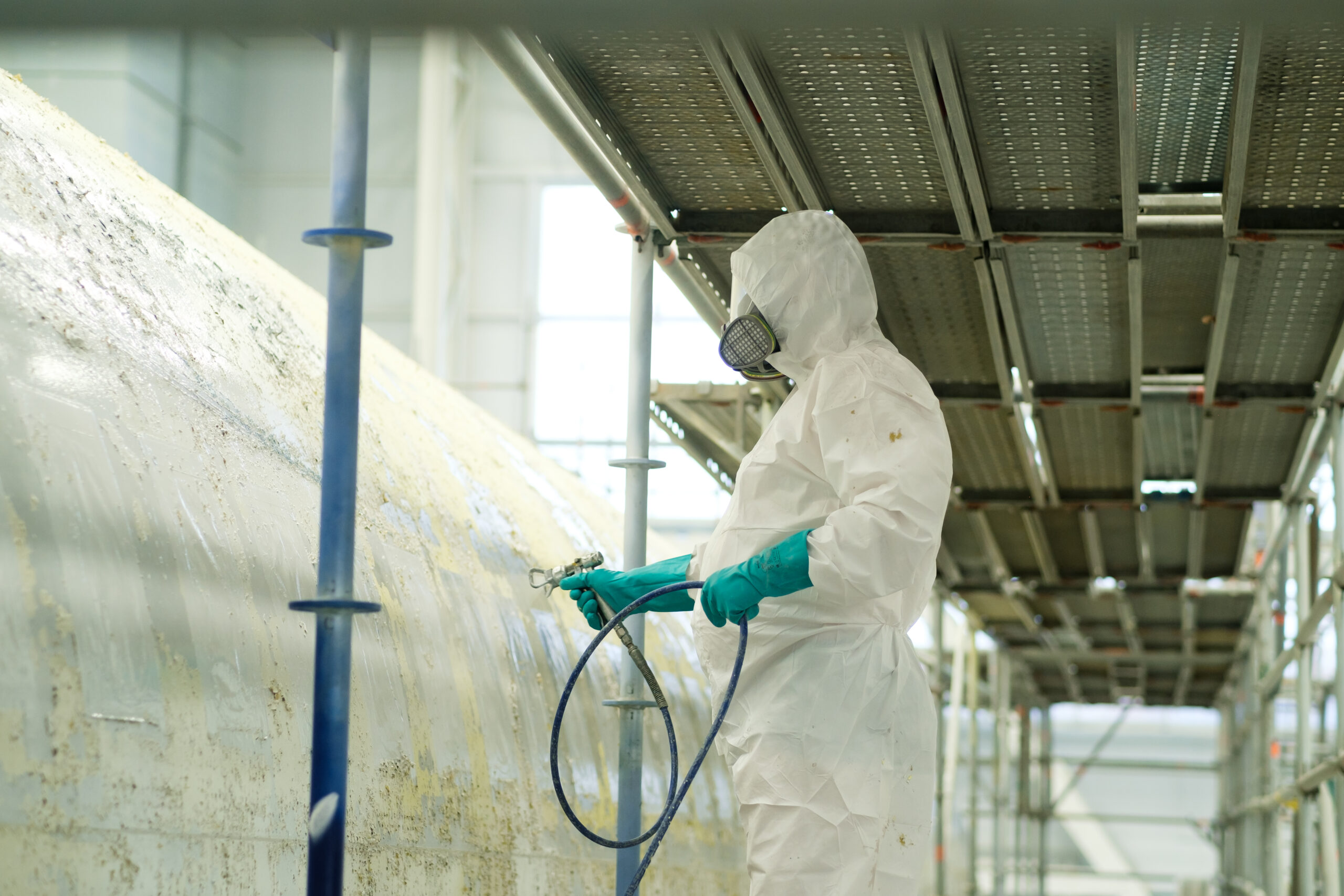
| Containment Setup | Negative air pressure chambers and plastic barriers were installed |
| Air Filtration | HEPA air scrubbers run continuously throughout the space |
| Material Removal | Contaminated drywall, insulation, and ceiling tiles removed |
| Surface Treatment | EPA-registered industrial strength mold remover applied to all surfaces |
| Drying | Commercial dehumidifiers and air movers deployed |
| Clearance Testing | Post-remediation air and surface samples sent to a lab |
| Restoration | Structural rebuilding and finishing completed |
Clearance testing is not optional. A credible contractor will not hand your building back without verified clean air results. If a company skips that step, walk away.
Best Industrial Mold Remover Methods For Different Surfaces
Not every surface responds to the same treatment. You should match the method to the material.
- Hard Non-Porous Surfaces Concrete, metal, and tile respond well to direct application of the best industrial mold remover biocide, followed by HEPA vacuuming and antimicrobial sealing.
- Porous materials, such as drywall, wood framing, insulation, and ceiling tiles that are heavily contaminated, usually require full removal and replacement. Surface treatment alone is not sufficient.
- HVAC Systems Mold inside air ducts is one of the highest-risk situations in any commercial building. You should shut the system down immediately and engage mold cleaning services that specialize in duct decontamination and post-cleaning verification.
How To Prevent Mold From Returning After Remediation
Removal fixes the present problem. Prevention stops the next one. You should put a maintenance plan in place the moment remediation wraps up.
Prevention Checklist:
| Task | Recommended Frequency |
| Roof and window leak inspection | Twice per year |
| Plumbing check for slow leaks | Quarterly |
| Indoor humidity monitoring | Ongoing — keep below 50% |
| HVAC service and duct cleaning | Annually |
| Commercial mold inspection | Every 1 to 2 years |
You should install humidity monitors in basements, server rooms, storage areas, and any space without direct ventilation. It is a small investment that prevents an enormous and costly problem. Schedule a preventive inspection with Northeast Water Remediation and stay ahead of mold before it starts.
Best Industrial Mold Removal In Abington, MA
Are you searching for the best industrial mold removal in Abington, MA? Massachusetts winters, humid summers, and freeze-thaw cycles create ideal conditions for moisture intrusion in commercial buildings. Local expertise matters; a contractor who understands the region’s climate specs the job correctly from the start.
Northeast Water Remediation serves commercial clients across Abington, Brockton, Quincy, Plymouth, and the greater Massachusetts area. The team is IICRC certified, responds fast, and handles every phase from inspection through full restoration.
Frequently Asked Questions
Q1: How fast does mold spread in a commercial building?
Mold begins to grow within 24 to 48 hours of water exposure. In large commercial spaces, it can cover significant surface areas within days. You should never wait to call a professional.
Q2: Can employees stay in the building during industrial mold removal?
It depends on the location and scale of contamination. Large remediation jobs typically require employees to vacate the affected zones. A certified inspector will advise on safe access during the process.
Q3: What is the difference between mold remediation and mold cleaning services?
Mold cleaning services address surface-level mold on hard materials. Full mold remediation services include containment, air filtration, material removal, treatment, drying, and clearance testing, a complete end-to-end process required for serious commercial contamination.
Q4: How long does industrial mold removal take in a commercial building?
Small to moderate jobs take 1 to 3 days. Large-scale commercial projects take 1 to 2 weeks, depending on the extent of damage, materials involved, and post-remediation testing timelines.
Q5: How do I choose the right industrial mold removal company in Massachusetts?
You should look for IICRC certification, documented commercial experience, clearance testing included in the scope, and transparent communication throughout the process. Northeast Water Remediation meets every one of those standards and serves the full Massachusetts region